
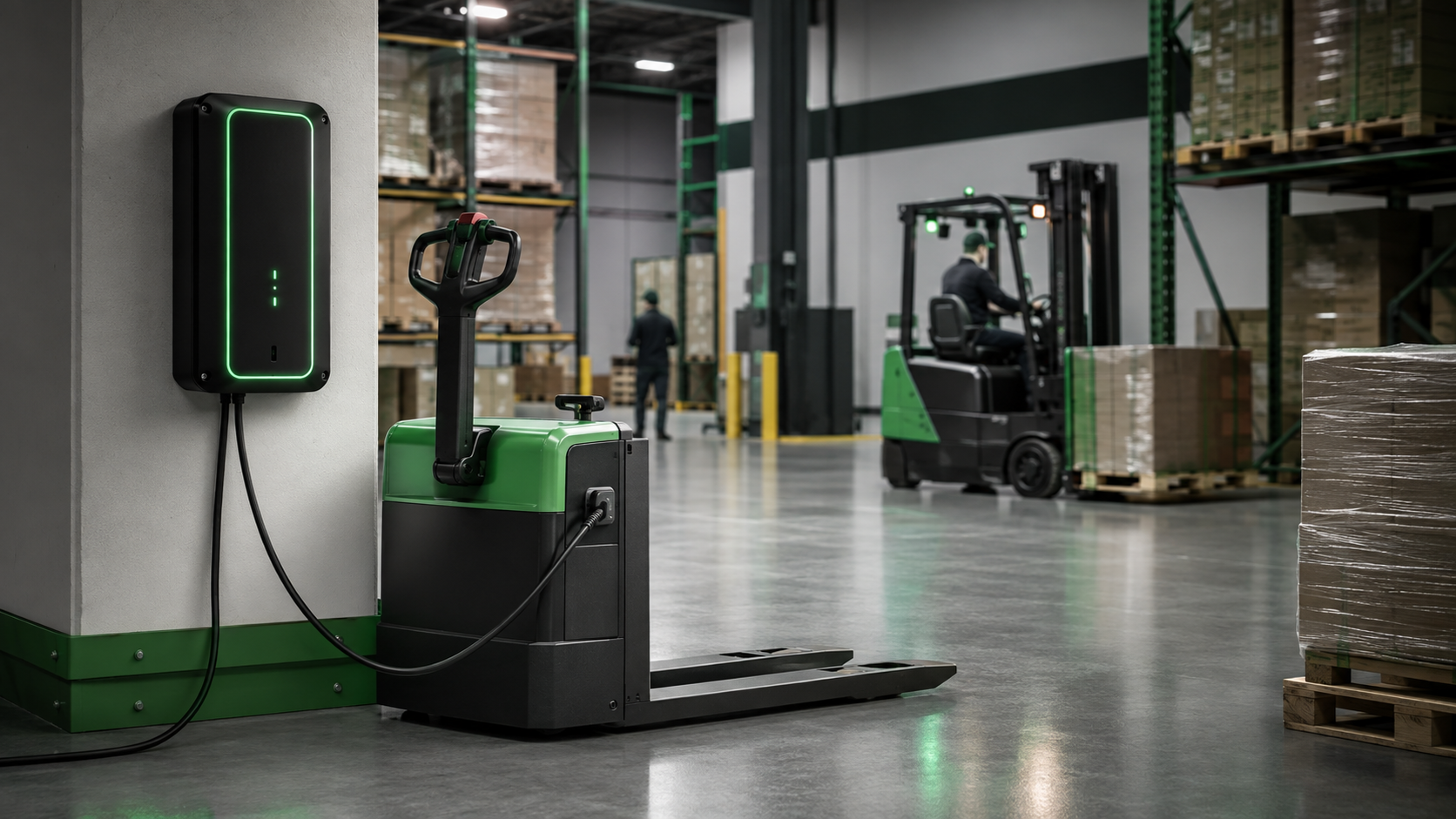
A material handling battery is not just another component on a purchasing list. It powers equipment that moves through busy warehouses, works near people, charges inside facilities, and often runs across multiple shifts. That means buyers need to understand more than voltage, capacity, and price. They also need to understand the standards, certifications, and documentation that support safe deployment.
Battery standards can feel like alphabet soup with a hard hat. UL, IEC, UN, CSA, CE, SDS, BMS, quality documents, test reports, transport requirements. The important thing is not memorizing every acronym. The important thing is knowing what documentation to ask for, what it proves, and whether it actually applies to the battery, charger, and use case you are buying.
Why standards matter in material handling battery procurement
Standards and certifications help reduce uncertainty. They give procurement, operations, safety, and maintenance teams a shared way to evaluate whether a battery system has been designed, tested, transported, and documented appropriately.
In material handling, the risk is not theoretical. Batteries are installed in forklifts, pallet jacks, tuggers, AGVs, AMRs, and other equipment that can operate around people, inventory, racking, and charging stations. A battery that is poorly matched or poorly documented can create delays during approval, problems during installation, and confusion when service support is needed.
For teams comparing suppliers, Green Cubes’ material handling batteries page is a useful starting point because it connects battery chemistry, BMS monitoring, truck fit, and operational use cases in one place.
Safety documentation: the first procurement checkpoint
The first question is simple: can the supplier provide clear safety documentation for the battery system?
Safety documentation should help buyers understand how the battery is designed, what protective systems are built in, and what conditions must be respected during use, charging, transport, and service. For lithium batteries, buyers should pay close attention to battery management system protections, operating limits, charging requirements, and handling instructions.
A strong lithium battery manufacturer should be able to explain how the battery system monitors voltage, current, temperature, and faults. This matters because the BMS is not just a technical feature. It is a core safety and uptime system.
Green Cubes’ forklift battery safety guide is a helpful supporting resource for teams that want to connect safety documentation with real warehouse practices.
Transport testing and shipping documentation
Lithium batteries also need proper transport documentation. Buyers should confirm that the supplier understands the transportation requirements for the specific battery type, configuration, and shipping method.
The most common procurement mistake is assuming transport documentation is generic. It is not. A document should match the product being shipped, not merely describe a similar battery family. Model numbers, configuration details, and document scope matter.
This becomes especially important for multi-site organizations, international shipments, replacement batteries, and spare parts programs. Poor documentation can delay receiving, create compliance questions, or slow down service deployment when the operation needs a replacement quickly.
Charger certifications and electrical safety
Battery certification is only one part of the equation. Chargers also need to be evaluated. A safe and reliable charging program depends on charger compatibility, electrical compliance, communication with the battery system, and correct installation.
For material handling fleets, charger documentation should answer practical questions: what voltage range is supported, what communication protocol is used, what safety standards apply, and what installation requirements must be followed.
Green Cubes’ SAFEFlex lithium battery chargers are designed for industrial lithium battery charging in material handling and ground support equipment applications. Linking charger selection to battery selection helps reduce compatibility risk and supports a cleaner approval process.
Quality systems and manufacturing credibility
Certifications are important, but they do not replace supplier evaluation. Procurement should also ask how the battery is manufactured, tested, serialized, and supported after delivery.
A credible lithium battery manufacturer should be able to explain its quality process in practical language. That includes incoming component checks, production controls, end-of-line testing, traceability, documentation control, and service support. Fancy words are cheap. Repeatable process is the thing that keeps Pack #500 behaving like Pack #5.
For buyers comparing supplier models, the Green Cubes blog on lithium battery manufacturer vs lithium battery companies is a natural internal link because it helps procurement teams evaluate supplier control, support, warranty, and total delivered cost.
Documentation buyers should request
The exact documentation package depends on the application, product, geography, and customer requirements. Still, most procurement teams should request a basic package before approving a material handling battery purchase.
That package may include safety documentation, transport documentation, applicable certificates, charger documentation, warranty terms, installation guidance, service process details, and product datasheets. Green Cubes’ datasheets resource page is a helpful destination for teams collecting product-level information during evaluation.
The goal is to create a clean file that operations, EHS, maintenance, and procurement can all reference. When documentation is complete before purchase, installation and approval tend to move faster.
How to evaluate a certificate or test report
A certificate is only useful if it applies to the exact product being purchased. Before accepting documentation, check the basics: product name, model number, voltage range, report date, issuing lab, standard referenced, geographic applicability, and whether the document covers the battery, charger, or both.
This step prevents a common procurement problem: receiving a certificate that looks impressive but does not actually match the purchased configuration. A certificate for a charger does not automatically cover a battery. A certificate for one model does not always cover another. A test report for transport does not replace safety certification.
Documentation review does not need to be dramatic. It just needs to be precise.
Standards do not replace application fit
Even strong documentation cannot fix a poorly matched battery. A material handling battery still needs to fit the truck, support the duty cycle, match the charger strategy, and operate safely in the facility environment.
That means procurement should evaluate standards and certifications alongside:
- Equipment model and voltage class
- Battery compartment dimensions and weight requirements
- Charger compatibility and placement
- Operating temperature range
- Shift pattern and runtime requirements
- Service expectations and warranty terms
This is where a full battery system view matters. Green Cubes’ motive batteries and chargers page is a strong internal link for buyers evaluating batteries and chargers as one integrated program.
The strongest battery programs make documentation easy
When documentation is hard to obtain, vague, or inconsistent, that can be a warning sign. Industrial battery buyers should not have to chase basic safety, transport, and charger information across disconnected PDFs and email threads.
A stronger process makes documentation part of the sales and engineering conversation early. The supplier should understand what the facility needs for approval, what standards apply to the equipment, and how documentation will be used by procurement, safety, and maintenance teams.
Next step
Battery standards and certifications are not paperwork theater. They protect the operation from approval delays, compatibility issues, safety gaps, and service confusion. Before selecting a material handling battery supplier, ask for the documentation package early and confirm that it applies to the exact battery, charger, and application being purchased.
Green Cubes can help procurement teams evaluate battery requirements, charger compatibility, safety documentation, and application fit before purchase.
Request a quote to start building a documented material handling battery solution for your equipment.
DISCLAIMER Please note that everything posted on this site is up to date at the time of posting. Things change and products may be discontinued at any time. Please contact us for the most up to date information.