
Join us at MODEX 2026, Atlanta, GA. April 13-16, 2026, Georgia World Congress Center.
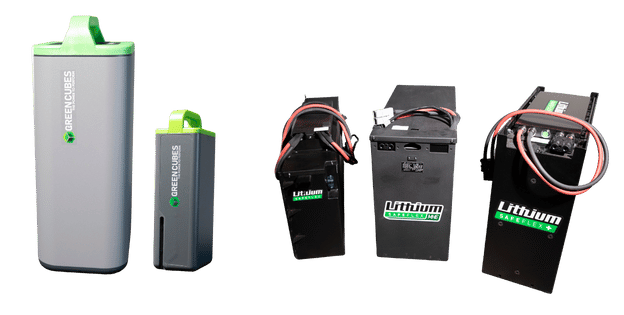
“Custom” can mean two very different things in industrial battery projects. Sometimes it means a pack that is engineered from scratch around a unique machine. Other times it means configuring proven components to match a specific voltage, footprint, connector, and operating environment. In both cases, the outcome depends on one thing: how well the requirements are defined before design begins.
This guide explains what to specify for custom lithium ion battery packs used in industrial equipment, including voltage and capacity, enclosure and mounting constraints, communications needs, certifications, thermal requirements, and lead times. It also includes a spec template you can use internally to reduce back-and-forth and get to a quote faster.
Start with the application, not the battery
A custom battery pack is only “right” if it matches how the equipment works in the real world. Before you talk about voltage or amp-hours, define the load profile and environment:
- What does the equipment do and how often does it run?
- Is the load continuous or burst-heavy (lifting, acceleration, high torque)?
- How many hours per day and how many shifts?
- What is the operating temperature range?
- Does it move indoors, outdoors, or across dock doors and cold zones?
This application context prevents the most common failure mode in custom projects: building a pack that looks good on paper but struggles under peak demand or extreme conditions.
Voltage: the non-negotiable specification
Voltage is foundational. Many industrial machines are designed around a specific voltage architecture. A mismatch can create performance issues, faults, or inconsistent behavior.
When you define voltage, also define:
- Voltage range tolerance (what the equipment expects during discharge)
- Peak current needs (especially for bursts)
- Any constraints from the motor controller or inverter system
In many cases, you will also want to confirm how the battery interfaces with existing chargers or whether a new charging solution is part of the project.
Capacity and runtime: define the duty cycle clearly
Capacity selection should be driven by how long the equipment needs to operate between charging events, not an idealized “one shift” assumption.
To define capacity accurately, specify:
- Target runtime between charges
- Average load and peak load conditions
- Whether opportunity charging is expected
- What happens if the machine is undercharged (is partial runtime acceptable?)
If you can, share any energy usage data. If you cannot, share operational patterns. Even that helps engineering teams size correctly.
Enclosure, mounting, and connector details: where custom becomes real
This is the part that causes delays if it is discovered late. Industrial equipment often has strict physical constraints, and custom packs must fit cleanly and safely.
Key enclosure specs include:
- Maximum dimensions and mounting points
- Ingress protection needs (dust, moisture, washdown)
- Vibration and shock environment
- Cable exit location and strain relief requirements
- Connector type, polarity, and service access needs
Also define how the pack will be serviced. If maintenance cannot access connectors or fasteners easily, the battery becomes a long-term headache.
Communications and data: what should the battery report?
Many industrial applications benefit from visibility. Communications can be simple (status indicators) or integrated (CAN bus or other protocols).
Define:
- Whether the equipment needs state of charge, health status, fault codes, or temperature reporting
- Whether the system needs communication to a controller, display, or fleet management platform
- What your operators need to see to prevent misuse and downtime
This is also where the BMS requirements become important, because the BMS is the layer that makes data reliable and protection intelligent.
Certifications and compliance: specify early
If your equipment goes into regulated environments, certifications and compliance requirements need to be known before the design is finalized.
Specify:
- Required certifications based on your market and application
- Any facility-level safety requirements
- Documentation requirements for internal approval or customer audits
This reduces redesign risk and protects lead time.
Thermal requirements: prevent performance surprises
Thermal design is not only about safety. It is about predictable performance. If the equipment works in cold zones, outdoors, or in high-heat environments, thermal behavior matters.
Define:
- Operating temperature range
- Charging temperature range
- Whether the pack will be exposed to sudden temperature swings
- Any airflow or enclosure heat dissipation constraints
If the equipment moves between freezer and ambient environments, this should be included in the requirement set.
Lead times: what drives them and how to reduce delays
Custom work takes time, but many delays come from unclear specs, late discovery of physical constraints, or changing compliance requirements midstream.
To keep lead time realistic:
- Lock voltage, footprint, connectors, and mounting constraints early
- Confirm the charging strategy and infrastructure requirements
- Define the compliance and documentation requirements before design freeze
- Decide who owns testing and validation responsibilities
A clean requirements package speeds quoting, design, prototyping, and approval.
Custom lithium ion battery pack spec template
Use this template to gather what engineering and procurement typically need:
Equipment and use case
- Equipment type/model:
- Operating hours per day / shifts:
- Duty cycle description (average and peak load):
- Environment (indoor/outdoor/cold storage/dock exposure):
- Target runtime between charges:
Electrical requirements
- Nominal voltage:
- Peak current:
- Continuous current:
- Charger requirements (existing/new):
- Connector type/polarity:
Mechanical requirements
- Max dimensions:
- Mounting points / bracket constraints:
- Ingress protection needs:
- Vibration/shock conditions:
- Service access constraints:
Controls and data
- Communications required (CAN/other/none):
- Data required (SOC/SOH/faults/temp):
- Display requirements (if any):
Compliance
- Certifications required:
- Documentation needed:
- Validation/test expectations:
Timeline
- Target delivery date:
- Prototype needs and iteration expectations:
Next step: get to a clean quote faster
Custom lithium ion battery packs do not have to be slow or messy. If you can share a basic requirements package using the template above, Green Cubes can help you narrow specifications, confirm fit and charging strategy, and move from concept to quote with fewer revisions.
Category: Blog
DISCLAIMER Please note that everything posted on this site is up to date at the time of posting. Things change and products may be discontinued at any time. Please contact us for the most up to date information.