
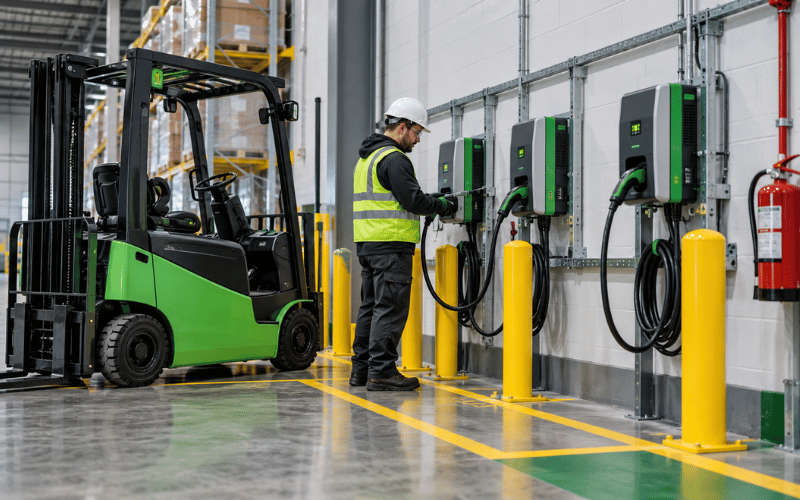
Warehouse Safety Month is a useful reminder that safety programs should not live in a binder nobody opens. The best safety initiatives are practical, visible, and connected to the equipment people use every day. For many facilities, that means taking a closer look at the forklift battery program, charging stations, operator training, and the daily habits that keep material handling equipment moving safely.
Forklift batteries affect more than power. They influence charging behavior, traffic flow, inspection routines, downtime, and emergency response planning. When charging areas are cluttered, poorly marked, or misunderstood, safety risk increases. When battery warnings are ignored, cables are damaged, or operators are unsure what to do, small problems can become equipment downtime or facility incidents.
Use Warehouse Safety Month as a focused opportunity to evaluate charging stations, refresh training, improve signage, and strengthen fire prevention practices around forklift batteries and chargers.
Start with the charging station layout
Charging stations are often created around electrical convenience, not workflow. That may work when the building is quiet, but it can create risk when the floor is busy. A charger placed in a high-traffic lane, behind staging pallets, or near tight turns can lead to blocked access, damaged cables, and rushed plug-ins.
A safer charging station should be easy to identify, easy to access, and protected from normal warehouse traffic. Operators should not have to drag charging cables across travel paths or squeeze between pallets to connect equipment. Chargers should have enough space around them for safe movement, ventilation, inspection, and service access.
Facilities using SAFEFlex lithium battery chargers should review charger placement as part of the full power system. A charger is not just an accessory. It is part of the safety and uptime strategy for the fleet.
Use signage that tells people what to do
Warehouse signage often becomes wallpaper: visible, technically present, and completely ignored. For charging stations, signage should be simple enough that a temporary employee or new operator can understand it without asking five people and summoning the ghost of compliance.
Effective signage should identify the charging zone, explain basic plug-in expectations, show who to contact if there is a fault, and remind operators to keep the area clear. It should also make unsafe behavior obvious, such as staging pallets in the charging zone or leaving cables where forklifts can run over them.
Good signage does not replace training, but it reinforces the behavior you want during busy shifts.
Build fire prevention into daily routines
Fire prevention is not only about emergency response. It starts with everyday conditions: clean charging zones, undamaged cables, properly seated connectors, clear access, and operators who know when to stop using equipment and report a problem.
For lithium systems, the battery management system plays an important protective role by monitoring battery conditions such as voltage, current, and temperature. But BMS protection works best when the facility also supports safe behavior. Operators should understand that warnings, faults, and abnormal charging behavior should not be ignored just to finish a run.
Green Cubes’ forklift battery safety guide is a useful internal resource for teams that want to connect BMS features, thermal protection, inspections, and charging practices into one safety program.
Inspect cables, connectors, and chargers before peak risk builds
Many charging problems start as small physical issues. A cable gets pulled too hard. A connector gets dropped. A charger gets blocked by pallets. A plug-in starts to feel loose. None of these issues may seem urgent at first, but they can increase resistance, generate heat, interrupt charging, or create avoidable downtime.
Warehouse Safety Month is a good time to run a focused inspection of every charging station. Maintenance teams should look at cable condition, connector fit, charger mounting, ventilation, access, signage, floor markings, and whether operators are using the area the way it was intended.
The inspection should also include behavior. If chargers are available but operators are not plugging in, the problem may be training, placement, or shift timing. If one charging station is always blocked, the layout may need to change. Safety issues are often operational design issues wearing a tiny fake mustache.
Train operators on what changes with lithium forklift batteries
Many facilities are moving from lead-acid to lithium because lithium forklift batteries can reduce maintenance, support faster charging, and simplify battery handling. But the training needs to change with the technology.
Operators should understand how and when to charge, what charger indicators mean, what battery alerts require reporting, and how to avoid damaging connectors. They should also understand that lithium removes many lead-acid tasks, such as watering, but does not remove responsibility for inspections and safe use.
For facilities transitioning from older battery programs, the Green Cubes blog on fork lift batteries maintenance changes when switching to lithium is a strong supporting resource. It explains how lithium changes daily routines, maintenance expectations, and uptime planning.
Make opportunity charging part of safe charging behavior
Opportunity charging can help multi-shift operations keep equipment available by allowing operators to plug in during natural breaks instead of waiting for batteries to run low. But opportunity charging only works safely when the process is planned.
Charging during breaks, shift changes, staging pauses, or paperwork windows can reduce low-charge events and support better uptime. However, those charging points need to be placed where operators can connect equipment without blocking lanes or creating cable hazards.
Green Cubes’ resource on opportunity charging can help facilities think through how charging behavior, battery selection, and operational flow work together. For a more detailed operational view, the blog on opportunity charging for multi-shift operations is another useful internal link.
Include incident prevention in refresher training
Training should not only tell operators what the rules are. It should explain what problems those rules prevent. When operators understand the reason behind the process, they are more likely to follow it under pressure.
For forklift battery charging, refresher training should cover how to inspect connectors before plug-in, how to report charger faults, how to keep charging areas clear, what to do when a battery warning appears, and who owns the next step when equipment seems unsafe.
Temporary labor and seasonal support should be included in this training. Peak volume often introduces new people, new shift patterns, and more pressure to move quickly. That is exactly when simple, repeated safety messages matter most.
Create a charging station safety checklist
A Warehouse Safety Month checklist should be short enough to use and specific enough to matter. For forklift battery charging areas, include these review points:
- Charging stations are clearly marked and easy to access.
- Cables and connectors are free from visible damage.
- Chargers are not blocked by pallets, carts, or stored inventory.
- Operators know what battery and charger alerts mean.
- Charging zones are dry, clean, and protected from traffic.
- Signage explains plug-in rules and fault reporting steps.
- Maintenance has a process for reviewing recurring charger or battery issues.
This type of checklist helps EHS, Maintenance, and Operations work from the same playbook. It also makes safety easier to audit after Warehouse Safety Month ends.
Turn Safety Month into a year-round battery program
Warehouse Safety Month is a strong starting point, but battery safety should not be treated as a once-a-year campaign. Charging station conditions, operator habits, and equipment usage change throughout the year. The best programs create repeatable routines that stay visible after the posters come down.
That means reviewing charging station access, tracking recurring faults, refreshing operator training, and making sure battery and charger decisions support the way the facility actually works.
Green Cubes’ motive batteries and chargers solutions help facilities think about power as a complete system: batteries, chargers, safety, uptime, and daily workflow.
Next step
Warehouse Safety Month is a good time to evaluate whether your forklift battery charging program is supporting both safety and uptime. Green Cubes can help review your forklift battery setup, charger placement, operator routines, and documentation needs to recommend a safer, more efficient material handling power strategy.
Request a quote to start building a safer forklift battery and charger program for your facility.
DISCLAIMER Please note that everything posted on this site is up to date at the time of posting. Things change and products may be discontinued at any time. Please contact us for the most up to date information.