
How to Choose the Right Forklift Battery for Your Fleet
Forklift performance depends heavily on the battery powering the equipment. The type of battery used in a forklift directly affects productivity, charging time, maintenance requirements, operating costs, and the overall efficiency of warehouse operations. Choosing the right forklift battery is not simply a technical decision. It plays a major role in how reliably your fleet performs across daily shifts.
Today’s material handling operations can choose from several battery technologies, each with different advantages depending on the application, equipment type, and workload demands. Traditional lead-acid batteries have powered forklifts for decades, while newer lithium-ion forklift batteries offer improvements in runtime, charging speed, and maintenance.
This guide from Green Cubes, a developer of lithium battery systems for industrial equipment, explains the key differences between forklift battery types, how battery performance impacts warehouse productivity, and what factors operations managers should consider when selecting a battery for their fleet.
Understanding these differences can help businesses reduce downtime, improve efficiency, and make better long-term investment decisions for their material handling equipment.
Types of Forklift Batteries

Most electric forklifts operate using one of two primary battery technologies. Understanding the differences between lead-acid forklift batteries and lithium-ion forklift batteries is the first step in selecting the right power system for your equipment and operational needs. Each technology powers material handling equipment effectively, but they differ significantly in maintenance requirements, charging behavior, operating efficiency, and long-term cost.
Historically, lead-acid batteries have been the industry standard for forklifts. In recent years, lithium-ion technology has become increasingly popular as warehouses and distribution centers look for ways to improve uptime, reduce maintenance, and support multi-shift operations. Choosing between these two forklift battery types often comes down to how frequently equipment is used, how much maintenance an operation can support, and whether productivity improvements justify the investment.
Lead-Acid Forklift Batteries
Lead-acid batteries have powered industrial equipment for decades and remain common in many forklift fleets. These batteries use liquid electrolyte and lead plates to generate power, which requires regular upkeep to keep the battery operating safely and efficiently.
Key characteristics of lead-acid forklift batteries include:
- Established technology with a long history in material handling equipment
- Routine watering and maintenance required to maintain electrolyte levels
- Heavy battery design, which can contribute to forklift counterbalance weight
- Long charging and cooling periods that can limit equipment availability between shifts
Because lead-acid batteries require ongoing maintenance, many facilities dedicate space and labor for battery charging rooms and service routines. While the upfront cost of lead-acid batteries can be lower, maintenance requirements and downtime can increase operational costs over time.
Lithium-Ion Forklift Batteries
Lithium-ion forklift batteries are a newer power solution designed to support modern warehouse operations. Instead of liquid electrolyte, lithium batteries use sealed cells and advanced battery management systems to regulate power output, charging, and temperature.
Common advantages of lithium-ion forklift batteries include:
- Sealed battery design that eliminates watering and most routine maintenance
- Higher energy density, allowing more usable power within a smaller footprint
- Faster charging and opportunity charging, which helps support multi-shift operations
- Consistent power output throughout the battery discharge cycle
Because lithium-ion batteries require minimal maintenance and recharge much faster than lead-acid batteries, many warehouses adopt them to improve uptime and simplify battery management.
Lithium Iron Phosphate (LFP) Batteries
Most lithium-ion forklift batteries used in industrial material handling equipment are built using Lithium Iron Phosphate (LFP) chemistry. LFP batteries are a type of lithium-ion battery specifically designed for high durability, safety, and long cycle life in demanding industrial environments.
Compared with other lithium chemistries, LFP batteries are widely adopted in forklift and warehouse equipment because they deliver reliable power while maintaining strong thermal and chemical stability.
Key advantages of lithium iron phosphate forklift batteries include:
- Exceptional cycle life, often exceeding 3,000 charge cycles
- Stable chemistry that improves safety and reduces overheating risk
- Consistent voltage output, allowing forklifts to operate at full performance throughout the discharge cycle
- Reduced maintenance requirements compared to traditional battery technologies
LFP batteries are also well suited for opportunity charging, allowing operators to recharge equipment during breaks or between shifts without damaging the battery. This charging flexibility helps warehouses maintain higher equipment availability and reduce the need for battery swapping or spare battery inventory.
Because of their durability, safety profile, and efficiency advantages, lithium iron phosphate batteries have become the preferred lithium technology for many modern forklift fleets and material handling operations.
Operational Differences Between Forklift Battery Types
While lead-acid and lithium batteries can both power electric forklifts effectively, the biggest differences appear in daily operation, maintenance requirements, and charging behavior. Understanding how each battery type performs in real working environments helps warehouse operators determine which solution best supports their equipment and productivity goals.
Lead-acid forklift batteries typically require structured charging schedules and routine maintenance to operate safely. These batteries often need an extended charging period followed by a cooling phase before returning to service. Facilities using lead-acid batteries frequently manage multiple batteries per forklift and rotate them throughout shifts to maintain uptime. Regular watering, monitoring electrolyte levels, and maintaining dedicated charging areas are also necessary parts of operation.
Lithium-ion forklift batteries, particularly those using Lithium Iron Phosphate (LFP) chemistry, operate very differently. Because these batteries are sealed and managed by onboard battery management systems, they do not require watering or many of the maintenance procedures associated with lead-acid technology. Lithium batteries can also support opportunity charging, allowing operators to recharge equipment during breaks or between tasks without harming the battery.
In practical terms, these operational differences can significantly impact warehouse productivity. Lead-acid battery fleets often require additional labor, charging infrastructure, and spare batteries to maintain operations across multiple shifts. Lithium-ion and LFP batteries simplify battery management while delivering consistent power throughout the discharge cycle, helping many modern material handling operations reduce downtime and streamline equipment management.
Related Content

- Forklift Battery Safety 101 With BMS, Thermal Protection, and Warehouse Best Practices
- Lithium Forklift Battery ROI and Payback Compared to Lead-Acid
- Lithium Ion Forklift Battery Cold Weather Tips
- Forklift Batteries How To Choose Right Lithium Pack
- FBP-1000 Datasheet
- SAFEFlex Safety Brief
- SAFEFlex Efficiency Brief
- Motive Handling Brochure
Forklift Battery Sizes and Compatibility

Choosing the correct forklift battery is not only about battery chemistry. The battery must also match the voltage requirements, physical compartment size, and equipment type of the forklift. Using the wrong battery size or voltage can affect equipment performance, runtime, and overall safety.
Understanding these compatibility factors helps ensure that the battery integrates properly with the forklift and delivers reliable power throughout daily operations.
Forklift Battery Voltage
Forklift batteries are available in several voltage configurations depending on the type and size of the equipment being powered. The voltage determines how much electrical power the battery can deliver to the forklift’s motor and lifting systems.
Common forklift battery voltages include:
- 24-volt batteries commonly used in pallet jacks and smaller warehouse equipment
- 36-volt batteries often used in mid-size forklifts and narrow aisle equipment
- 48-volt batteries typically found in standard warehouse forklifts and reach trucks
- 80-volt batteries used in larger forklifts designed for heavy industrial applications
Selecting the correct voltage is essential to ensure the forklift operates at its intended performance level.
Battery Compartment Size
In addition to voltage, the physical dimensions of the battery must fit properly within the forklift’s battery compartment. Forklift batteries are often designed to serve as part of the equipment’s counterweight system, which means the size and weight of the battery can influence equipment stability and lifting capacity.
Key compatibility factors include:
- Battery length, width, and height
- Battery weight requirements for proper counterbalance
- Terminal location and cable configuration
- Battery tray design within the forklift
Before installing a replacement battery, it is important to verify that the battery dimensions match the specifications provided by the equipment manufacturer.
Matching Batteries to Equipment Types
Different types of material handling equipment require specific battery configurations based on their size, power demands, and operational environment.
Common equipment types include:
- Electric pallet jacks
- Reach trucks
- Counterbalance forklifts
- Narrow aisle forklifts
- Order pickers and stackers
Each of these machines may require a different voltage range, battery size, and capacity to operate efficiently.
Selecting a battery that matches the forklift’s power requirements and physical specifications helps ensure reliable performance, consistent runtime, and safe operation across warehouse environments.
Related Content

- The Impact of Lithium Forklift Batteries on Warehouse Efficiency
- How Lithium Batteries Transform Energy Efficiency in Manufacturing Operations
- Enhancing Material Handling Performance With Lithium Pallet Jack Batteries
- Meeting Cold Chain Logistics Challenges with Lithium Forklift Batteries
- Materials Handling Solutions Brochure
- SAFEFlex Quick Start Guide
- Cold Storage Best Practices
- SAFEFlex MHE
Forklift Battery Service Life
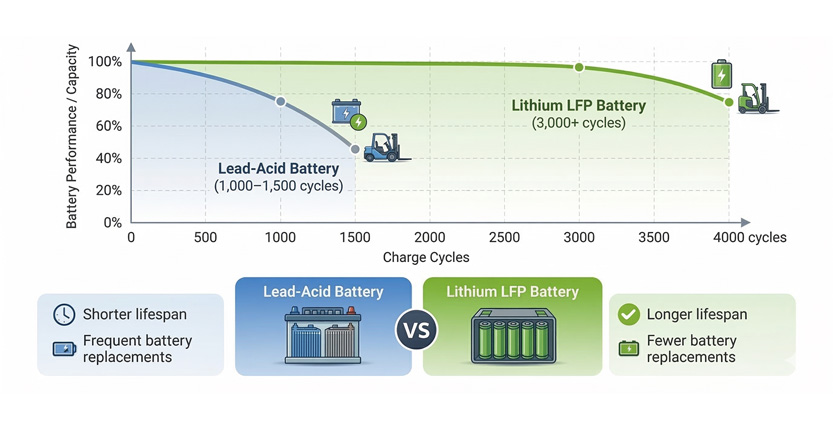
Battery lifespan is one of the most important factors when evaluating forklift power systems. The number of charge cycles a battery can complete before performance declines directly affects equipment reliability, maintenance schedules, and long-term operating costs.
Lead-acid forklift batteries typically provide between 1,000 and 1,500 charge cycles under normal operating conditions. Their lifespan can vary depending on how well the battery is maintained. Regular watering, proper charging procedures, and careful temperature management are all required to achieve the expected service life. If these maintenance routines are inconsistent, battery capacity can decline more quickly, which may shorten the usable life of the battery.
Lithium-ion forklift batteries, particularly those using Lithium Iron Phosphate (LFP) chemistry, are designed for significantly longer service life. Many lithium forklift batteries can exceed 3,000 charge cycles, often lasting several years longer than traditional lead-acid batteries in comparable operating environments. Because lithium batteries require minimal maintenance and can support opportunity charging, they often maintain performance more consistently over time.
A longer battery lifespan reduces the frequency of battery replacements and helps lower the overall cost of operating a forklift fleet. When evaluating battery options, considering the full lifecycle of the battery — including maintenance, labor, downtime, and replacement frequency — provides a more accurate picture of the total cost of ownership.
Forklift Battery Comparison
| Feature | Lithium (LFP) | Lead Acid |
|---|---|---|
| Cycle Life | 3,000+ charge cycles | 1,000–1,500 charge cycles |
| Maintenance | Minimal to none | Requires regular watering and maintenance |
| Charging Time | Typically 1–2 hours | Often 8+ hours plus cooling time |
Forklift Battery Maintenance

Maintenance requirements are one of the biggest operational differences between forklift battery technologies. The amount of time, labor, and infrastructure needed to maintain batteries can significantly affect warehouse productivity and the long-term cost of operating a forklift fleet.
Lead-Acid Forklift Battery Maintenance
Lead-acid batteries require consistent monitoring and routine service to operate safely and maintain performance. Because these batteries rely on liquid electrolyte, they must be carefully maintained to prevent damage, reduced capacity, or shortened battery life.
Typical maintenance tasks for lead-acid forklift batteries include:
- Watering the battery cells to maintain proper electrolyte levels, often required every 5–10 charge cycles
- Equalizing charges to balance voltage across battery cells and prevent performance issues
- Monitoring temperature conditions, since excessive heat or cold can impact battery efficiency and lifespan
- Cleaning terminals and connectors to prevent corrosion and maintain electrical performance
Facilities operating lead-acid batteries often dedicate specific charging areas and maintenance procedures to ensure these batteries are properly serviced.
Lithium-Ion Forklift Battery Maintenance
Lithium-ion forklift batteries, especially those using Lithium Iron Phosphate (LFP) chemistry, require far less routine maintenance. These batteries use sealed cells and integrated battery management systems that automatically regulate voltage, temperature, and charge balancing.
Advantages of lithium battery maintenance include:
- Automatic cell balancing managed by the onboard battery management system
- No watering requirements, eliminating the need to maintain electrolyte levels
- Reduced sensitivity to environmental conditions, allowing batteries to perform reliably across a wider range of operating environments
- Fewer maintenance procedures, which reduces labor requirements and downtime
Because lithium batteries eliminate many routine service tasks associated with lead-acid batteries, operations can simplify battery management while improving equipment uptime. For many modern warehouses and distribution centers, reduced maintenance is one of the primary reasons lithium forklift batteries are becoming the preferred solution for powering material handling equipment.
Related Content

- Reducing Total Cost of Ownership in Warehousing with Lithium Pallet Jack Batteries
- Energy Savings in Cold Storage Facilities with Lithium Forklift Batteries
- Cut Costs with Lithium Forklift Batteries in Distribution Centers
- How Lithium Batteries Improve Cold Chain Logistics
- JCB Teletruk 66-40E Battery Solution
- Lithium SAFEFlex vs. Lead Acid Batteries
- SAFEFlex PLUS
- MHE
Forklift Battery Run Time Comparison

Run time is a critical factor when evaluating forklift battery performance. The amount of operating time a battery provides between charges directly impacts equipment availability, operator productivity, and the efficiency of warehouse operations. In addition to total run time, power consistency throughout the discharge cycle can affect how reliably forklifts perform during demanding tasks.
Run Time Per Charge
Lead-acid batteries can provide reliable run time when properly maintained and fully charged. However, their available operating time often decreases as the battery discharges. As voltage drops throughout the discharge cycle, forklifts may experience reduced power or slower performance toward the end of a shift.
Lithium-ion forklift batteries, particularly those using Lithium Iron Phosphate (LFP) chemistry, typically deliver more consistent run time per charge. Lithium batteries maintain a steady voltage level throughout most of the discharge cycle, allowing forklifts to operate at consistent performance levels until the battery approaches a low state of charge.
Power Consistency
Another key difference between battery types is how consistently power is delivered during operation. Lead-acid batteries gradually lose voltage as energy is depleted, which can affect lifting speed, travel speed, and overall equipment responsiveness.
Lithium-ion batteries maintain a much flatter discharge curve. This means forklifts powered by lithium batteries can operate at near full power for a longer portion of the battery cycle, helping operators maintain consistent productivity throughout the workday.
Operational Efficiency
Because lithium batteries provide stable power output and support opportunity charging, they often improve overall fleet efficiency. Operators can recharge lithium batteries during breaks or shift changes without waiting for a full recharge cycle. This flexibility reduces downtime and helps equipment remain available when needed.
For operations that rely on consistent equipment performance across multiple shifts, lithium forklift batteries can help improve uptime, maintain steady power delivery, and support more efficient warehouse operations.
Related Content
Forklift Battery Charging Considerations

Charging requirements play a major role in how efficiently forklift fleets operate throughout the day. The amount of time needed to recharge a battery, along with how and when charging can occur, directly impacts equipment availability and warehouse productivity. Lead-acid and lithium forklift batteries follow very different charging processes, which can influence how operations plan their charging schedules and infrastructure.
Lead-Acid Battery Charging
Lead-acid forklift batteries typically require a structured charging process that includes multiple stages. A full charge often takes around eight hours, followed by an additional cool-down period before the battery can safely return to service. Because of this extended cycle, many facilities using lead-acid batteries rely on battery rotation systems with spare batteries available for each forklift.
This charging model can require:
- Dedicated battery charging rooms
- Battery changing equipment
- Scheduled charging times between shifts
- Additional labor to manage battery swaps
While this process has been common in traditional warehouse environments, it can limit equipment availability and introduce operational complexity for facilities running multiple shifts.
Lithium-Ion Battery Charging
Lithium-ion forklift batteries offer a much more flexible charging approach. Many lithium batteries can reach a significant charge in one to two hours, and they support opportunity charging, which allows operators to recharge batteries during short breaks or idle periods without damaging the battery.
This flexibility allows operations to:
- Charge forklifts during breaks or shift changes
- Reduce or eliminate battery swapping
- Avoid maintaining multiple batteries per forklift
- Simplify charging infrastructure within the facility
Impact on Operational Uptime
Because lithium forklift batteries charge faster and allow opportunity charging, they can significantly increase equipment uptime. Instead of removing batteries for extended charging cycles, operators can keep forklifts in service longer with short charging intervals throughout the day.
For operations that depend on continuous material movement, faster charging and greater charging flexibility can help maintain higher productivity levels and reduce downtime across the forklift fleet.
Forklift Battery Watering Systems
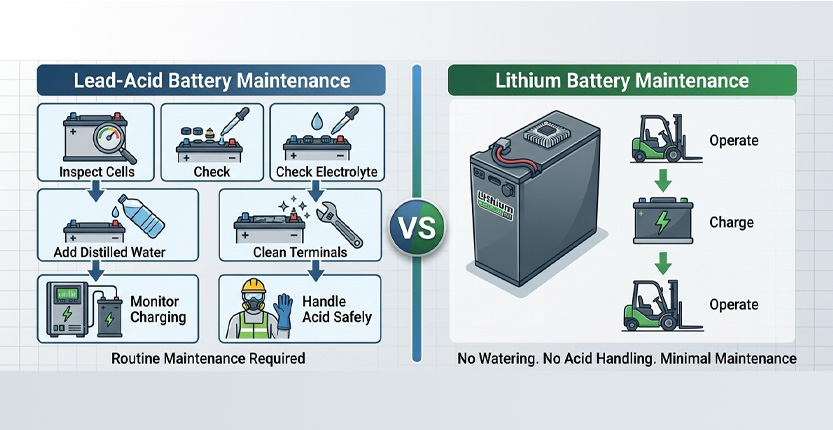
Watering systems are an essential part of maintaining traditional lead-acid forklift batteries. Because these batteries rely on liquid electrolyte, the water level inside each battery cell must be monitored and replenished regularly to prevent damage and maintain proper performance.
Watering Requirements for Lead-Acid Batteries
During normal operation and charging, lead-acid batteries gradually lose water through the electrochemical process that produces power. If electrolyte levels drop too low, battery plates can become exposed, which may lead to permanent damage, reduced battery capacity, or shortened service life.
To prevent these issues, lead-acid forklift batteries typically require:
- Routine watering every 5–10 charging cycles
- Visual inspection of electrolyte levels across multiple battery cells
- Use of distilled water to maintain proper chemical balance
Many facilities install centralized or automated watering systems to simplify this process, especially when managing large fleets of forklifts.
Acid Handling and Maintenance
Because lead-acid batteries contain sulfuric acid, maintenance procedures must also account for safe handling and environmental considerations. Facilities often require designated battery rooms with proper ventilation, spill containment, and protective equipment for employees performing battery maintenance.
In addition to watering, operators must monitor battery condition, clean terminals, and ensure charging procedures are performed correctly to avoid overcharging or overheating.
Labor and Operational Impact
Maintaining lead-acid forklift batteries requires dedicated time and labor from warehouse staff or maintenance teams. Regular watering, inspections, and battery management routines can add operational complexity, particularly for facilities operating large fleets or multiple shifts.
Lithium-ion forklift batteries eliminate these maintenance requirements entirely. Because lithium batteries are sealed and do not rely on liquid electrolyte, they do not require watering or acid handling procedures. This simplified maintenance approach helps many operations reduce labor demands, improve safety conditions, and streamline battery management across the facility.
Forklift Battery Safety

Safety is an important consideration when evaluating forklift battery technologies. Because batteries store and deliver significant electrical energy, proper handling, charging procedures, and maintenance practices are essential for maintaining a safe working environment. Different battery chemistries introduce different safety considerations for warehouse operators and maintenance teams.
Safety Considerations for Lead-Acid Forklift Batteries
Lead-acid batteries contain liquid electrolyte made from sulfuric acid, which requires careful handling and proper safety procedures during charging and maintenance. If the battery is damaged or improperly maintained, the electrolyte can pose potential risks to workers and equipment.
Common safety considerations for lead-acid batteries include:
- Risk of acid spills during maintenance, watering, or battery changes
- Corrosive electrolyte materials that can damage equipment or cause injury if handled improperly
- Hydrogen gas release during charging, which requires proper ventilation to prevent buildup in enclosed charging areas
Because of these factors, facilities using lead-acid forklift batteries often establish dedicated battery rooms designed with ventilation systems, spill containment measures, and protective equipment for workers performing maintenance.
Safety Advantages of Lithium Forklift Batteries
Lithium-ion forklift batteries, particularly those using Lithium Iron Phosphate (LFP) chemistry, are designed as sealed battery systems. These batteries do not contain liquid electrolyte that requires routine maintenance or watering, which reduces many of the safety considerations associated with traditional battery technologies.
Advantages of lithium battery safety include:
- Sealed battery units that eliminate the risk of acid spills
- No watering or electrolyte maintenance, reducing worker exposure to hazardous materials
- Integrated battery management systems that monitor temperature, voltage, and charging conditions
Because lithium forklift batteries require fewer maintenance procedures and eliminate the need for acid handling, many operations find they simplify battery safety management while supporting a cleaner and more controlled work environment.
Choosing a Forklift Battery Based on Your Operation

Not every warehouse or facility operates the same way. The type of battery that works best for a forklift fleet often depends on shift schedules, facility size, equipment utilization, and environmental conditions. Evaluating how forklifts are used throughout the day can help determine which battery technology delivers the best performance and operational efficiency.
Single-Shift Operations
Facilities running a single daily shift often have enough time overnight to fully recharge forklift batteries. In these environments, traditional lead-acid batteries may be able to meet operational requirements because equipment has sufficient downtime for charging and cooling cycles.
However, lithium forklift batteries can still offer advantages by reducing maintenance requirements and simplifying battery management.
Multi-Shift Warehouse Operations
In operations running two or three shifts per day, forklift uptime becomes much more critical. Lead-acid batteries in these environments often require multiple battery sets and dedicated battery changing equipment to keep forklifts operating throughout the day.
Lithium-ion forklift batteries can help simplify multi-shift operations because they support opportunity charging. Operators can recharge equipment during breaks or between tasks, allowing the same battery to power the forklift across multiple shifts without battery swaps.
High Utilization Distribution Centers
Large distribution centers and fulfillment facilities often run forklifts continuously to support high product throughput. Consistent power delivery and fast charging become important factors in maintaining operational efficiency.
Lithium batteries can provide consistent voltage throughout the discharge cycle, helping forklifts maintain lifting performance and travel speed even during extended operating periods.
Cold Storage and Controlled Environments
Facilities operating in refrigerated or cold storage environments place additional demands on forklift batteries. Temperature conditions can affect battery performance and charging efficiency.
Lithium Iron Phosphate (LFP) batteries are often used in these environments because they can deliver reliable performance across a wider range of temperatures while reducing maintenance requirements associated with traditional battery technologies.
Evaluating the Right Battery for Your Fleet
Choosing the right forklift battery involves balancing equipment requirements, operational schedules, charging infrastructure, and long-term maintenance considerations. Understanding how forklifts are used throughout a facility helps determine which battery technology best supports productivity, safety, and long-term operating efficiency.
Which Battery Is Best for Different Types of Forklifts

Different types of material handling equipment place different demands on their power systems. Factors such as lifting capacity, operating environment, shift schedules, and equipment design all influence which battery configuration works best.
Understanding the power requirements of each type of forklift can help operations select a battery that delivers reliable runtime, consistent performance, and efficient charging.
Pallet Jack Batteries
Electric pallet jacks are commonly used for horizontal material movement in warehouses, retail distribution centers, and manufacturing environments. These machines typically operate with 24-volt battery systems and are designed for frequent short trips and repeated lifting cycles.
Lithium batteries are increasingly used in pallet jacks because they support fast charging and require minimal maintenance. Opportunity charging during breaks can help pallet jacks remain available throughout the workday without requiring battery swaps.
Reach Truck Batteries
Reach trucks are designed for narrow aisle warehouse environments where vertical lifting and precision control are important. These forklifts often require 36-volt or 48-volt battery systems depending on the equipment model.
Because reach trucks often operate continuously in high-density storage environments, consistent power output becomes important. Lithium batteries can help maintain stable lifting and travel performance throughout the discharge cycle while also supporting faster charging between shifts.
Counterbalance Forklift Batteries
Counterbalance forklifts are among the most common types of industrial forklifts used in warehouses, distribution facilities, and manufacturing plants. These forklifts typically operate with 48-volt or 80-volt battery systems depending on the size and lifting capacity of the equipment.
Battery weight is also an important factor for counterbalance forklifts because the battery contributes to the equipment’s counterweight system. Selecting the correct battery size and weight helps ensure stable lifting performance and safe operation.
Narrow Aisle Forklift Batteries
Narrow aisle forklifts are designed to operate in high-density warehouse storage environments where maximizing vertical storage space is critical. These machines often require reliable power delivery to support lifting operations at significant heights.
Lithium forklift batteries are commonly used in narrow aisle equipment because they provide consistent voltage output throughout the discharge cycle. This stable power delivery helps maintain lifting performance and travel speed during demanding warehouse operations.
Forklift Battery Charging Infrastructure and Fleet Planning
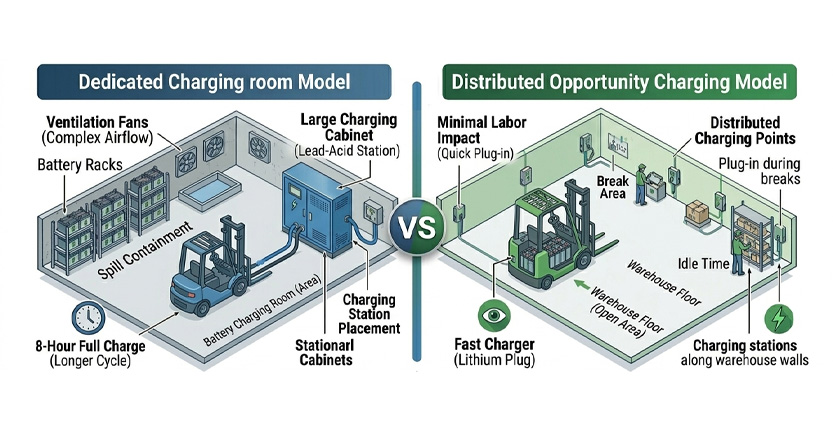
Selecting the right forklift battery is only one part of building an efficient material handling operation. Charging infrastructure, facility layout, and fleet management strategies all influence how effectively forklifts can remain powered throughout daily operations.
Planning battery charging infrastructure carefully helps facilities maintain equipment uptime while supporting safe and efficient charging procedures.
Charging Areas for Lead-Acid Batteries
Facilities operating lead-acid forklift batteries often require dedicated battery charging rooms designed to handle the maintenance and charging process safely. Because lead-acid batteries release hydrogen gas during charging, these areas must be properly ventilated and designed to manage potential acid exposure.
Lead-acid charging areas often include:
- Ventilated battery charging rooms
- Battery changing equipment or hoists
- Spill containment and protective equipment
- Dedicated storage for spare batteries
In multi-shift operations, facilities may also maintain several battery sets per forklift to ensure equipment remains available while batteries recharge.
Charging Infrastructure for Lithium Forklift Batteries
Lithium forklift batteries simplify charging infrastructure for many facilities. Because lithium batteries do not release gases during normal charging and require no watering or electrolyte maintenance, they can often be charged directly within the operating environment.
Many operations install distributed charging stations throughout the warehouse, allowing forklifts to recharge during breaks or idle periods. This opportunity charging approach reduces the need for battery swaps and helps keep equipment available throughout the workday.
Planning for Fleet Electrification
As warehouses continue transitioning toward electric material handling equipment, battery planning becomes an important part of facility design. Evaluating factors such as charging locations, shift schedules, and energy usage can help operations determine the best battery strategy for their fleet.
Key considerations when planning forklift battery infrastructure include:
- Number of forklifts operating simultaneously
- Daily operating hours and shift schedules
- Charging station placement within the facility
- Electrical capacity and power distribution
A well-designed charging strategy helps ensure forklifts remain powered throughout daily operations while minimizing downtime and maintenance complexity.
Forklift Battery Pricing
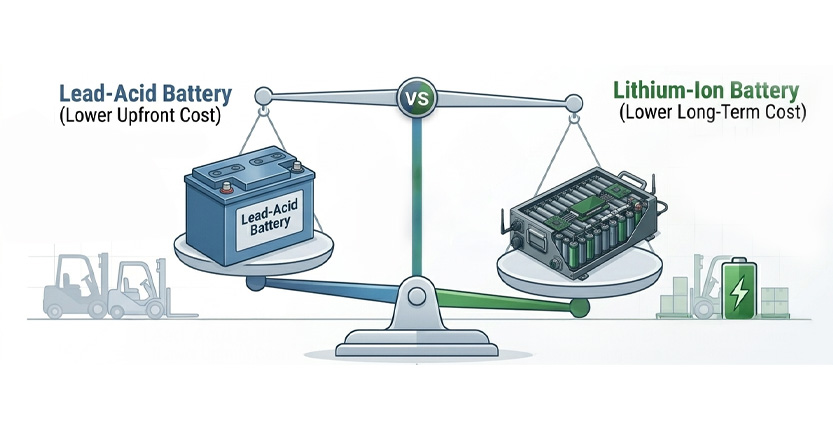
When evaluating forklift battery options, upfront purchase price is often one of the first factors considered. Traditional lead-acid batteries typically have a lower initial cost compared with lithium-ion batteries. However, the total financial impact of a forklift battery extends well beyond the initial purchase price.
To fully understand forklift battery pricing, it is important to consider the total cost of ownership, which includes maintenance requirements, operational downtime, labor costs, and battery lifespan.
Upfront Battery Cost
Lead-acid forklift batteries generally have a lower initial purchase price, which has made them a common choice for many warehouse operations. Lithium-ion forklift batteries, including those using Lithium Iron Phosphate (LFP) chemistry, often require a higher upfront investment due to the advanced battery technology and integrated battery management systems used to regulate performance.
While the initial cost difference can appear significant, many operations find that long-term operational costs are equally important when evaluating battery options.
Factors That Influence Total Cost of Ownership
Several operational factors influence the overall cost of running a forklift battery fleet over time.
Maintenance requirements can add ongoing expenses for lead-acid batteries, including watering systems, battery cleaning, inspections, and replacement parts. Lithium batteries require minimal routine maintenance, which can reduce service-related costs.
Downtime and charging efficiency also play a role in overall cost. Lead-acid batteries often require extended charging and cooling periods, which can reduce equipment availability and require additional batteries to support multi-shift operations. Lithium batteries charge more quickly and support opportunity charging, helping forklifts remain available for longer periods.
Labor costs can increase when employees must manage battery swaps, watering schedules, and maintenance procedures. Lithium batteries simplify many of these tasks by eliminating routine service requirements and reducing the need for battery handling.
Evaluating Long-Term Value
While lead-acid batteries may have a lower initial purchase price, lithium forklift batteries often deliver value through longer service life, reduced maintenance, and improved equipment uptime. For many operations, these operational advantages can help offset the initial investment and lower the overall cost of running a forklift fleet over time.
When comparing forklift battery options, evaluating both upfront pricing and long-term operational costs can provide a clearer picture of which technology best supports productivity, efficiency, and long-term financial performance.
Frequently Asked Questions About Forklift Batteries
Understanding forklift battery technology helps operations make informed decisions about equipment performance, maintenance, and long-term costs. The following questions address some of the most common topics warehouse managers and equipment operators consider when evaluating forklift battery options.
Which forklift battery lasts longer?
Lithium forklift batteries generally provide a longer service life than traditional lead-acid batteries. Many lithium batteries, especially those built with Lithium Iron Phosphate (LFP) chemistry, can exceed 3,000 charge cycles, while lead-acid batteries typically last 1,000 to 1,500 cycles under normal operating conditions. A longer cycle life can reduce the frequency of battery replacement and lower long-term operating costs.
How do lithium forklift batteries reduce maintenance?
Lithium forklift batteries require far less routine maintenance than lead-acid batteries. Lead-acid batteries must be watered regularly, monitored for electrolyte levels, and occasionally equalized to maintain proper performance. Lithium batteries use sealed cells and built-in battery management systems that automatically balance and regulate the battery, eliminating the need for watering or many other routine service tasks.
What are the charging differences between lead-acid and lithium forklift batteries?
Lead-acid batteries typically require long charging cycles of around eight hours, followed by a cooling period before they can be used again. Lithium forklift batteries charge much faster and can often reach a substantial charge in one to two hours. Lithium batteries also support opportunity charging, allowing forklifts to recharge during short breaks or idle periods throughout the workday.
Are lithium forklift batteries safer than lead-acid batteries?
Both battery technologies are designed for industrial use when handled properly, but lithium batteries can simplify safety procedures in many facilities. Lead-acid batteries contain liquid sulfuric acid and release hydrogen gas during charging, which requires proper ventilation and careful handling. Lithium forklift batteries are sealed units that do not require watering or acid maintenance, reducing many of the safety procedures associated with lead-acid battery systems.
How do forklift battery costs compare?
Lead-acid batteries typically have a lower upfront purchase price. Lithium forklift batteries usually require a higher initial investment but can offer long-term savings through reduced maintenance, faster charging, longer battery life, and improved operational uptime. Evaluating both purchase price and long-term operational costs can help determine which battery type provides the best value for a specific application.
Do lithium forklift batteries require less space?
Lithium forklift batteries can simplify battery infrastructure within a facility. Because lithium batteries charge faster and support opportunity charging, many operations no longer need dedicated battery rooms or spare batteries for rotation between shifts. This can reduce the space required for battery storage and charging equipment while improving workflow efficiency within the warehouse.