Green Cubes Swappable Battery Powers New Bretford MobilePro Mobile Workstation

Cutting-edge power solution ensures continuous operation with fast-swapping capability, superior cycle life, and eco-friendly technology.

KOKOMO, Ind. — Apr 10, 2026 Green Cubes Technology today announced that its industry leading, high capacity, long runtime Industrial Swappable Battery technology is featured in the Bretford MobileProTM Mobile Workstation, delivering reliable power for true mobility and productivity, allowing users to power devices, printers, and tools anywhere without the need for fixed outlets. Designed for manufacturing, warehouse, logistics, retail, and other demanding environments, the MobilePro™ platform empowers organizations to transition to fully cordless workflows. With rugged construction, all-terrain mobility, and modular customization, MobilePro is engineered for continuous, real-world use—bringing power directly to the point of work and eliminating costly downtime.

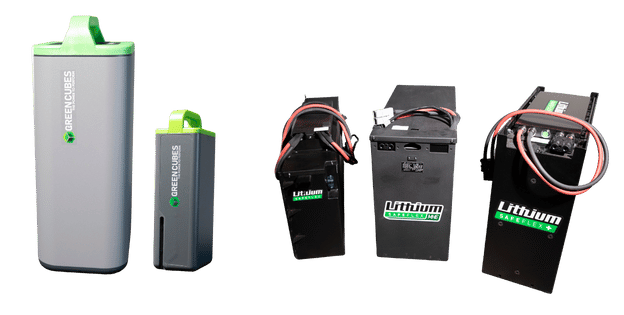
At the core of this solution is Green Cubes’ swappable lithium iron phosphate (LFP) battery technology. The integrated 1024Wh battery delivers high-capacity, stable power in a compact, rugged form factor and supports swapping for uninterrupted, 24/7 operation. This enables workstation users to maintain productivity without downtime, even in demanding environments.

“The integration of Green Cubes’ swappable battery technology into the MobilePro Mobile Workstation brings a new level of flexibility and efficiency to mobile operations,” said Jennifer Payton, Senior Vice President for Green Cubes. “Together with Bretford, we are enabling truly cordless workflows that eliminate downtime and expand the possibilities where uninterrupted work can happen.”

Green Cubes’ industrial swappable batteries are purpose-built to electrify mobile workstations with maximum runtime, safety, and flexibility. Featuring LFP chemistry, IP65-rated protection against dust and moisture, and advanced battery management systems, the platform ensures long cycle life and reliable performance in both indoor and outdoor conditions.

The MobilePro™ platform supports swappable batteries that allow continuous operation across shifts, while maintaining safe, consistent power delivery for sensitive electronics and critical workflows.

The Green Cubes swappable battery installed in the MobilePro™ Mobile Workstation will be shown at MODEX in the Bretford booth A7023 April 13 – 16 in Atlanta, GA. Visit Green Cubes Technology in its own booth B15346 to talk to battery experts and see samples of the industrial swappable and other mobile workstation solutions. To learn more about the swappable batteries, visit: www.greencubes.com. To learn more about the workstation, visit www.bretford.com.

About Bretford

Bretford is a U.S.-based manufacturer of innovative workspace, power, and mobility solutions designed for education, commercial, and industrial environments. With a legacy of quality craftsmanship and a focus on solving real-world challenges, Bretford designs and manufactures products that enable productivity, flexibility, and durability in demanding settings. From mobile workstations and charging solutions to custom-engineered products, Bretford empowers organizations to work more efficiently—wherever work happens.

About Green Cubes Technology

Green Cubes Technology develops and manufactures safe and reliable electrification solutions that enable its OEM and enterprise customers to transition from Lead Acid and Internal Combustion Engine (ICE) power to Lithium-ion battery power. Green Cubes utilizes proven hardware and software platforms to build the most reliable Lithium power solutions in its industries. With employees across six countries, Green Cubes has been producing innovative, high-performance, and high-quality power solutions since 1986. For more information about Lithium SAFEFlex PLUS and other battery solutions, please visit greencubes.com or email info@greencubes.com

Green Cubes Supports Emerging Innovator USAMR with Advanced Lithium Battery Systems for AMRs

KOKOMO, Ind. — Apr 8, 2026 Green Cubes Technology (Green Cubes), the leader in producing Lithium-ion (Li-ion) power systems that facilitate the transition from lead-acid batteries and Internal Combustion Engine (ICE) power to green Li-ion battery power, is expanding its support for emerging companies focused on robotics, automation and smart logistics. The company’s industrial lithium-ion battery systems are now powering USAMR automated mobile robot systems that move goods through warehouses and manufacturing facilities to reduce material handling costs and increase accuracy, productivity and throughput.

“Green Cubes sees strong growth in robotics and automation among both established and small or early-stage firms that are reshaping factory and warehouse operations,” said Robin Schneider, Director of Marketing for Green Cubes Technology. Green Cubes CEO Michael Walsh adds, “By leveraging our team of application engineers and 40 years of delivering technology tailored to each equipment’s needs, Green Cubes is a great partner for supplying safe, reliable and energy-efficient battery solutions that help these innovators bring new products to market faster and scale with proven power system integration hardware and software.”

This collaboration reflects a broader commitment to the robotics ecosystem. Startups and young companies often need power systems that are certified, field-proven, and ready for integration without high engineering overhead. By providing a complete suite of battery packs, chargers and fleet power management tools, Green Cubes reduces friction for hardware developers and their end users.

“USAMR aims to be the industry leader in providing US designed, engineered and manufactured mobile robot solutions at a competitive price for US customers,” said Nick Saur, CEO and Co-Founder. “Green Cubes battery systems enable continuous operation cycles and quick swaps which are essential for USAMRs customers that run high volume or time-sensitive operations.”

Green Cubes Technology’s Lithium SAFEFlex batteries bring a host of advantages to Automated Guided Vehicle (AGV) systems and Autonomous Mobile Robots (AMRs), ensuring they meet the high demands of industrial automation with efficiency and reliability. These benefits include:

  • Durability: AMR batteries must withstand rigorous conditions. Green Cubes Industrial Swappable batteries offer exceptional durability, with a Battery Management System that prevents overcharging and undercharging, making them ideal for the tough environments where AMRs operate.
  • Safety: The Lithium Iron Phosphate (LFP) chemistry in Green Cubes’ AMR lithium batteries ensure enhanced safety. This chemistry reduces the risk of overheating, a crucial feature for AMRs operating in diverse settings.
  • High Energy Density: The energy density of Industrial Swappable AMR batteries is a game-changer. These batteries offer more energy storage without the added bulk, allowing AMRs to operate more efficiently and carry heavier loads.
  • Extended Battery Life: Industrial Swappable batteries have a longer lifecycle than traditional Lead Acid batteries, providing more operational cycles and reducing the need for frequent replacements.
  • Maximized Uptime: Quick charging and sustained runtimes are key features of our AMR lithium batteries. This ensures that AMRs have minimal downtime and maintain continuous operations.
  • Reliability: Each Industrial Swappable battery is constructed with high-quality, UL-approved components. The continuous monitoring by the Battery Management System ensures stable and reliable performance in all conditions.

In addition, Green Cubes recognizes that one size does not fit all in the world of AMRs. Its Engineering team works closely with clients to understand their unique operational requirements, enabling Green Cubes to design batteries that not only fit physically but also align with the power and endurance needs of different AMRs. Whether it’s for heavy-duty industrial use or precision in sensitive environments, Green Cubes’ customized batteries ensure optimal performance. By enhancing their adaptability and efficiency, Green Cubes helps to optimize the overall functionality and productivity of AMRs in a multitude of operational scenarios.

The Green Cubes swappable battery will be demonstrated at MODEX at the USAMR display A727 April 13 – 16 in Atlanta, GA. Visit Green Cubes Technology in its booth B15346 to talk to battery experts and see samples of the industrial swappable and other solutions. To learn more about the swappable batteries, visit: www.greencubes.com.

About Green Cubes Technology

Green Cubes Technology develops and manufactures safe and reliable electrification solutions that enable its OEM and enterprise customers to transition from Lead Acid and Internal Combustion Engine (ICE) power to Lithium-ion battery power. Green Cubes utilizes proven hardware and software platforms to build the most reliable Lithium power solutions.

in its industry. With employees across five countries, Green Cubes has been producing innovative, high-performance, and high-quality power solutions since 1986.since 1986.

Join Green Cubes – The Masters of Lithium – at MODEX 2026

Green Cubes Technology is heading to MODEX 2026 as a leader in industrial lithium-ion battery solutions. In this Forkliftaction feature, learn how Green Cubes continues to set the standard for performance, safety, and reliability in material handling equipment. Discover why more warehouse and fleet operators are choosing Lithium SAFEFlex and the full suite of Green Cubes power solutions.

Read the full article

About Green Cubes Technology

Green Cubes Technology develops and manufactures safe and reliable electrification solutions that enable its OEM and enterprise customers to transition from Lead Acid and Internal Combustion Engine (ICE) power to Lithium-ion battery power. Green Cubes utilizes proven hardware and software platforms to build the most reliable Lithium power solutions in its industries. With employees across six countries, Green Cubes has been producing innovative, high-performance, and high-quality power solutions since 1986.

For more information about Lithium SAFEFlex PLUS and other battery solutions, please visit greencubes.com or email info@greencubestech.com


Custom Lithium Ion Battery Packs and What to Specify for Industrial Equipment

“Custom” can mean two very different things in industrial battery projects. Sometimes it means a pack that is engineered from scratch around a unique machine. Other times it means configuring proven components to match a specific voltage, footprint, connector, and operating environment. In both cases, the outcome depends on one thing: how well the requirements are defined before design begins.

This guide explains what to specify for custom lithium ion battery packs used in industrial equipment, including voltage and capacity, enclosure and mounting constraints, communications needs, certifications, thermal requirements, and lead times. It also includes a spec template you can use internally to reduce back-and-forth and get to a quote faster.

Start with the application, not the battery

A custom battery pack is only “right” if it matches how the equipment works in the real world. Before you talk about voltage or amp-hours, define the load profile and environment:

  • What does the equipment do and how often does it run?
  • Is the load continuous or burst-heavy (lifting, acceleration, high torque)?
  • How many hours per day and how many shifts?
  • What is the operating temperature range?
  • Does it move indoors, outdoors, or across dock doors and cold zones?

This application context prevents the most common failure mode in custom projects: building a pack that looks good on paper but struggles under peak demand or extreme conditions.

Voltage: the non-negotiable specification

Voltage is foundational. Many industrial machines are designed around a specific voltage architecture. A mismatch can create performance issues, faults, or inconsistent behavior.

When you define voltage, also define:

  • Voltage range tolerance (what the equipment expects during discharge)
  • Peak current needs (especially for bursts)
  • Any constraints from the motor controller or inverter system

In many cases, you will also want to confirm how the battery interfaces with existing chargers or whether a new charging solution is part of the project.

Capacity and runtime: define the duty cycle clearly

Capacity selection should be driven by how long the equipment needs to operate between charging events, not an idealized “one shift” assumption.

To define capacity accurately, specify:

  • Target runtime between charges
  • Average load and peak load conditions
  • Whether opportunity charging is expected
  • What happens if the machine is undercharged (is partial runtime acceptable?)

If you can, share any energy usage data. If you cannot, share operational patterns. Even that helps engineering teams size correctly.

Enclosure, mounting, and connector details: where custom becomes real

This is the part that causes delays if it is discovered late. Industrial equipment often has strict physical constraints, and custom packs must fit cleanly and safely.

Key enclosure specs include:

  • Maximum dimensions and mounting points
  • Ingress protection needs (dust, moisture, washdown)
  • Vibration and shock environment
  • Cable exit location and strain relief requirements
  • Connector type, polarity, and service access needs

Also define how the pack will be serviced. If maintenance cannot access connectors or fasteners easily, the battery becomes a long-term headache.

Communications and data: what should the battery report?

Many industrial applications benefit from visibility. Communications can be simple (status indicators) or integrated (CAN bus or other protocols).

Define:

  • Whether the equipment needs state of charge, health status, fault codes, or temperature reporting
  • Whether the system needs communication to a controller, display, or fleet management platform
  • What your operators need to see to prevent misuse and downtime

This is also where the BMS requirements become important, because the BMS is the layer that makes data reliable and protection intelligent.

Certifications and compliance: specify early

If your equipment goes into regulated environments, certifications and compliance requirements need to be known before the design is finalized.

Specify:

  • Required certifications based on your market and application
  • Any facility-level safety requirements
  • Documentation requirements for internal approval or customer audits

This reduces redesign risk and protects lead time.

Thermal requirements: prevent performance surprises

Thermal design is not only about safety. It is about predictable performance. If the equipment works in cold zones, outdoors, or in high-heat environments, thermal behavior matters.

Define:

  • Operating temperature range
  • Charging temperature range
  • Whether the pack will be exposed to sudden temperature swings
  • Any airflow or enclosure heat dissipation constraints

If the equipment moves between freezer and ambient environments, this should be included in the requirement set.

Lead times: what drives them and how to reduce delays

Custom work takes time, but many delays come from unclear specs, late discovery of physical constraints, or changing compliance requirements midstream.

To keep lead time realistic:

  • Lock voltage, footprint, connectors, and mounting constraints early
  • Confirm the charging strategy and infrastructure requirements
  • Define the compliance and documentation requirements before design freeze
  • Decide who owns testing and validation responsibilities

A clean requirements package speeds quoting, design, prototyping, and approval.

Custom lithium ion battery pack spec template

Use this template to gather what engineering and procurement typically need:

Equipment and use case

  • Equipment type/model:
  • Operating hours per day / shifts:
  • Duty cycle description (average and peak load):
  • Environment (indoor/outdoor/cold storage/dock exposure):
  • Target runtime between charges:

Electrical requirements

  • Nominal voltage:
  • Peak current:
  • Continuous current:
  • Charger requirements (existing/new):
  • Connector type/polarity:

Mechanical requirements

  • Max dimensions:
  • Mounting points / bracket constraints:
  • Ingress protection needs:
  • Vibration/shock conditions:
  • Service access constraints:

Controls and data

  • Communications required (CAN/other/none):
  • Data required (SOC/SOH/faults/temp):
  • Display requirements (if any):

Compliance

  • Certifications required:
  • Documentation needed:
  • Validation/test expectations:

Timeline

  • Target delivery date:
  • Prototype needs and iteration expectations:

Next step: get to a clean quote faster

Custom lithium ion battery packs do not have to be slow or messy. If you can share a basic requirements package using the template above, Green Cubes can help you narrow specifications, confirm fit and charging strategy, and move from concept to quote with fewer revisions.

Sustainable Warehousing and How Lithium Forklift Batteries Reduce Waste and Emissions

Sustainable warehousing is often framed as packaging, recycling programs, or building upgrades. Those matter, but many distribution centers miss a big lever hiding in plain sight: the power system behind daily material handling. The way forklifts charge, how often batteries are replaced, and how much maintenance waste is produced can have a real impact on both operating costs and environmental outcomes.

Lithium forklift batteries are not a “green badge” on their own. They are a practical operational change that can reduce waste, improve energy efficiency, and simplify battery rooms in ways that support sustainability goals without slowing production.

Sustainability starts with reducing replacement and disposal cycles

One of the most visible sustainability impacts comes from replacement frequency. Traditional battery programs often involve more frequent replacement, more handling, and more end-of-life processing. Even when disposal is managed responsibly, replacement churn creates a steady stream of logistics, downtime, and waste that adds up across fleets.

Lithium systems are commonly adopted because they can deliver a longer usable service life in demanding duty cycles. When a facility replaces fewer batteries over time, the sustainability story becomes straightforward: fewer replacements means fewer units manufactured, shipped, stored, and processed at end of life. It also means fewer disruptions to the operation, which is a sustainability outcome in its own right because efficiency is one of the fastest paths to reducing waste.

Less maintenance waste and fewer consumables in day-to-day operations

Warehouses run on routines. When routines require consumables, they also generate waste. Traditional battery maintenance workflows can include ongoing handling tasks that produce waste over time, including maintenance fluids and cleaning materials, plus the labor burden that makes consistency hard during busy seasons.

Lithium forklift batteries reduce the need for ongoing maintenance tasks like watering. That simplification can translate into fewer consumables used in battery upkeep and fewer opportunities for improper handling that can create mess, safety incidents, and unplanned downtime. Sustainability is not only about what you buy, it is also about what you stop doing every week.

Energy efficiency: charging losses matter more than most teams expect

Warehouses pay for electricity, but they also pay for charging inefficiency in less obvious ways. Inefficient charging generates wasted energy and heat. Heat can increase HVAC load in some facilities, and it can also create less comfortable, less consistent battery room conditions. That matters because inconsistent conditions tend to drive inconsistent behavior.

Lithium adoption often improves charging efficiency and enables opportunity charging, which reduces the need for long, fixed charge and cool-down routines. When charging is more efficient and better aligned to operations, facilities can reduce energy loss and smooth out charging peaks. Even small efficiency gains can be meaningful at scale when you have a large fleet charging every day.

Simplified battery rooms can reduce congestion and safety risk

Sustainability and safety are linked. Incidents create waste: damaged equipment, cleanup, replacement parts, downtime, and sometimes even regulatory consequences. Battery rooms and charging zones are common friction points where workflow gets messy, especially when operators are rushing to keep equipment moving.

Lithium forklift batteries can support a simpler charging model that reduces battery handling and the traffic patterns that come from swaps and long charge queues. Cleaner charging zones also make it easier to enforce safety practices such as keeping lanes clear, protecting cables and connectors, and preventing charging areas from becoming storage zones. A safer environment is usually a more efficient environment, and efficiency supports sustainability.

Fewer disruptions can reduce “hidden emissions” from inefficiency

Most warehouses do not calculate emissions from operational inefficiency, but it exists. When equipment downtime causes congestion, overtime, rework, or rushed workflows, the facility consumes more energy and labor to produce the same output. That increases the footprint of each shipped unit.

Lithium upgrades often reduce performance drop-offs during shifts and reduce mid-day equipment failures tied to charging constraints. When forklifts stay available and consistent, the operation becomes smoother. Smooth operations are not just good for KPIs. They can reduce wasted motion, reduce overtime pressure, and reduce the number of times workflows get rerouted due to “dead truck” events.

A practical sustainability checklist for battery programs

If you want a simple way to connect battery decisions to sustainability outcomes, use these questions:

  • How often are batteries replaced across the fleet today?
  • How many labor hours are spent on battery maintenance and handling each week?
  • Do charging routines create idle equipment time during peak windows?
  • Are charging zones clean, safe, and consistently used?
  • Do you track energy usage or charging peaks tied to fleet charging?
  • Are there frequent failures tied to connectors, cables, or charging congestion?

Sustainability programs succeed when they connect directly to operations. If the battery program reduces downtime and waste while improving safety, it tends to stay supported long-term.

Next step: align sustainability goals with uptime goals

Sustainable warehousing does not require choosing between performance and responsibility. If your team is evaluating lithium forklift batteries, the best next step is to connect the discussion to measurable outcomes: replacement reduction, maintenance waste reduction, energy efficiency, and uptime.

If you share your fleet size, shift structure, and current battery replacement cycle, Green Cubes can help outline a battery program that supports both operational goals and sustainability targets.

Green Cubes Technology
Privacy Overview

This website uses cookies so that we can provide you with the best user experience possible. Cookie information is stored in your browser and performs functions such as recognising you when you return to our website and helping our team to understand which sections of the website you find most interesting and useful.